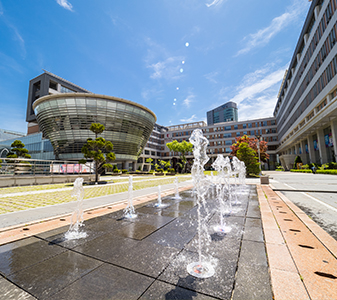
The Department of Technology, AI, and Society (DTAS) connects technology with public policy and management.
Our program builds professional competencies across three program stages
For undergraduate students: Practical technical literacy in AI systems, data management, and emerging technologies.
For master's program students: Project management skills to address complex technical and operational issues.
For doctoral program students: Strategic insight into global tech trends, AI governance, and policy formulation for international and national organizations and businesses.
Songdo as an Educational Advantage
Located in Songdo International City, Korea’s central hub for the biotech and AI city sectors, DTAS gives our students direct exposure to an environment driven by high-tech industries.
Industry Context: Students learn alongside a growing network of diverse corporations and urban initiatives.
Practical Application: Our program engages students in how to apply ethics, governance, and management frameworks directly to the technologies within these local industries.
Faculty Expertise
Our faculty members bring distinct industry and research perspectives to the classroom:
Health AI & Bioinformatics
AI Governance & Policy
Financial Technology
Educational Technology & Cultural Diversity
AI City
Game Design
Learning Across Academic and Professional Perspectives
Our programs bring together two distinct student groups who interact closely with our faculty, both benefiting from and contributing to our academic community:
The Academic Track: Undergraduates and continuing graduate students preparing for advanced degrees and research careers.
The Professional Track: Working professionals in graduate education seeking to expand their global mindset and technical expertise for leadership roles in expanding organizations.
Bringing these academic and professional tracks together in the same courses allows students and faculty to learn from each other. Undergraduates gain direct exposure to real-world industry perspectives, working professionals update their knowledge for career advancement, and faculty incorporate these diverse practical insights into their teaching and research.